



Rook Piercing: Where It's Placed, How Much It Hurts, and What Jewelry to Wear
The rook is a piercing that goes through the cartilage fold on the upper inner part of the ear, above the daith. It’s one of the most noticeable piercings to get because the fold is thick, and it takes 6 to 12 months to heal, according to the Cleveland Clinic. It’s worn with a curved bar or a hoop.
In summary
- Where it is located: in the upper inner crease, above the daith.
- Pain: in the upper part of the ear.
- Curing time: 6 to 12 months.
- Not all ears have a distinct fold: your piercer will tell you if it's possible.
Where is the rook, and anyone with ears can hear it?
It's on the antihelix, the fold that separates the concha from the upper part of the ear. That fold needs to be pronounced enough for the jewelry to sit right. That's why your piercer will examine your ear first: if the fold is too flat, they might suggest a flat or a contrahelix instead.
How much does a rook piercing hurt?
More so than the helix or the tragus. The cartilage is thick, and the needle has to pierce it at an angle, so you feel more pressure. The piercing takes just a few seconds; afterward, the area remains tender for several days. We compare it to the others in our guide on how much each ear piercing hurts.
How long does it take to heal, and how do you care for it?
The Cleveland Clinic lists the rook as one of the areas that take 6 to 12 months to heal. Because it’s protected inside the ear, it’s less prone to snagging than a helix piercing, but it also has poorer ventilation. Clean it twice a day without rotating the jewelry, and avoid earbuds and sleeping on that side for the first few months. Here’s a step-by-step guide on how to care for an ear piercing.
ROOK PIERCING
See all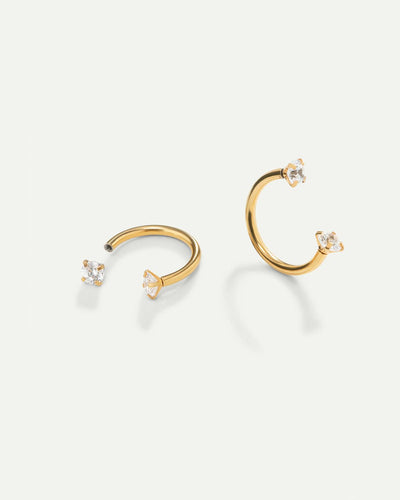 PIERCING LIEBE GOLD
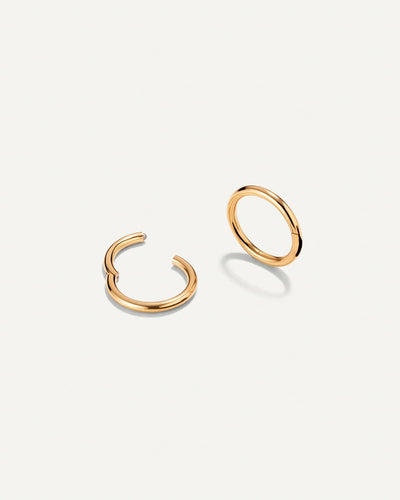 PIERCING LOOP S GOLD
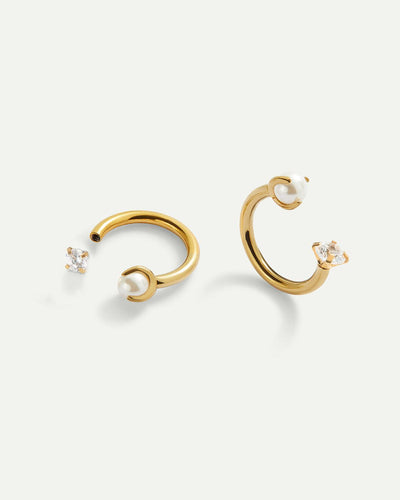 PIERCING LIEBE MIX GOLD
 PIERCING ETERNITY S DOUBLE GOLD
 PIERCING LOOP S SILVER
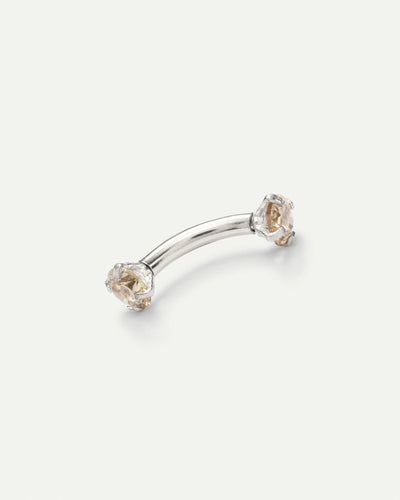 SURI SILVER PIERCING
 PIERCING LOOP S TWIST GOLD
 PIERCING ETERNITY S DOUBLE SILVER
Which piece should I place on the rook?
It’s most common to start with a curved bar that follows the shape of the fold and switch to a ring once it has healed. The diameter of the ring depends on the size of your fold. For your first piercing, the Cleveland Clinic recommends titanium, medical-grade steel, or 14-karat gold. We carry piercings made of ASTM F136 titanium (the grade used in implants) and 316L surgical steel, and we indicate the material on each piece. The standard bar is 1.2 mm with a screw-on closure. Bars measure 6 or 8 mm, and rings have an inner diameter of 6, 8, or 10 mm. You can find jewelry designed for this area under “rook piercings.”
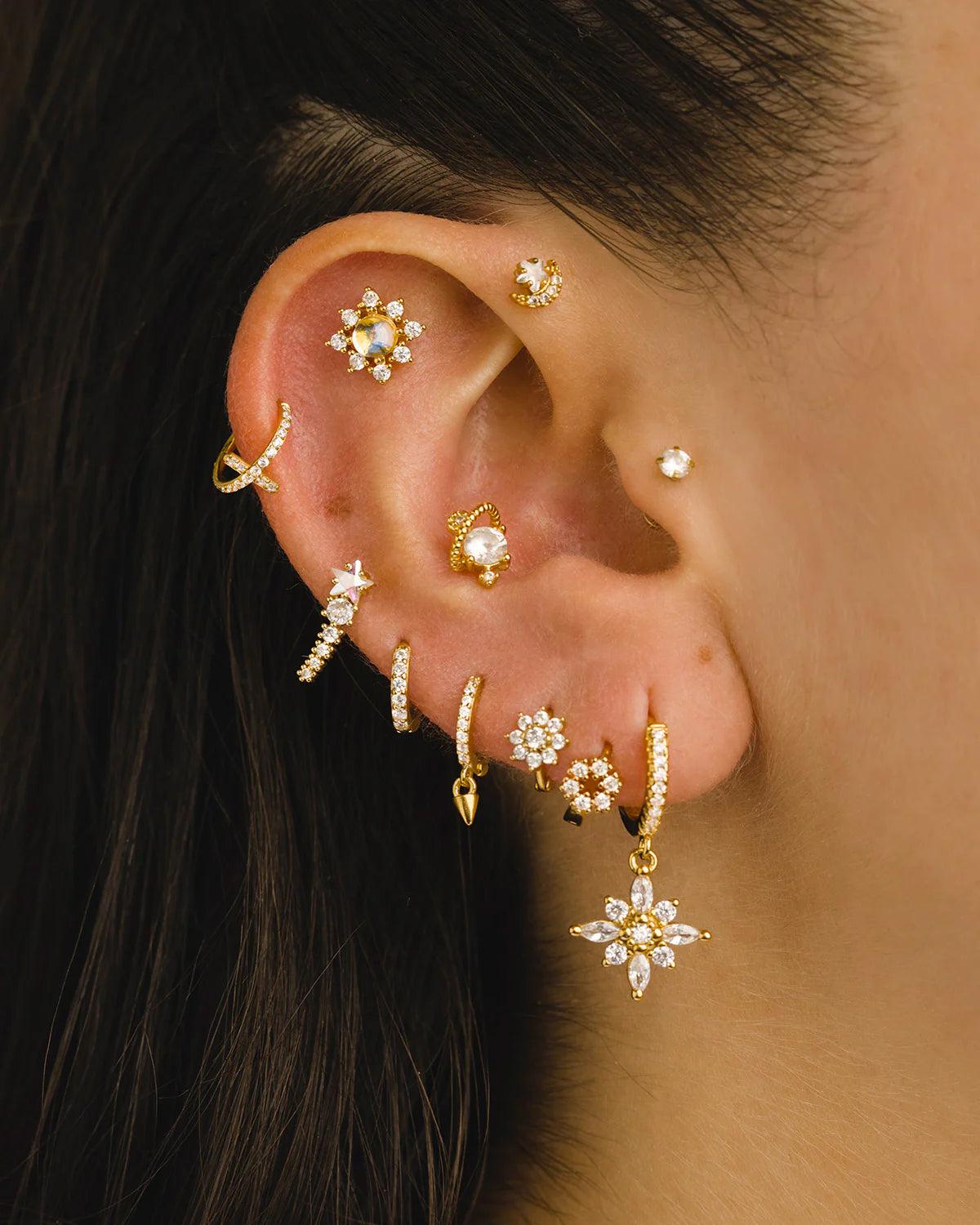
What does the rook go well with?
This piercing fills the upper part of the ear without extending beyond its outline, so it pairs well with a thin hoop in the helix and a small stud in the upper lobe. In our ear styling service, we usually recommend not getting this done at the same time as a daith piercing, because they’re very close together and the area tends to become more inflamed.
Frequently Asked Questions
Are "rook" and "daith" the same thing?
No. The rook is located in the upper inner fold, and the daith is located in the fold just above the ear canal. They're close together, but they're different areas.
Can I sleep with a rook?
Since it's inside the ear, it's less bothersome than a helix piercing, but for the first few months, it's best not to put weight on that side.
Can I put a hoop on right from the start?
It depends on your ear and your piercer. A curved bar usually causes less irritation while it heals.